When I interviewed people for our MSP, I always told them we were in the customer service industry. Technology was simply the product we delivered. No matter how good the technical work was, if a client did not feel supported, we had failed.
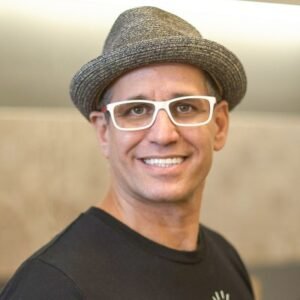
In this episode of MSP Mastery, we caught up with Stephen Spiegel, the Miami-based founder of CrewHu, a platform that helps MSPs build engaged teams and a culture of great customer service. Nick and I have known Stephen since the early days of CrewHu, and our business was one of the first to implement it. With more than 20 years building businesses, from ice cream franchises to software, Stephen has a refreshingly people-first view of what makes a service business stand out.
From Ice Cream to the Help Desk
Stephen began his entrepreneurial journey bringing Cold Stone Creamery stores to South Florida. The business grew to more than 100 employees, then hit a ceiling driven by staff turnover and disengagement. Leaving feedback took around 20 clicks, so each store received about one piece of feedback, usually negative. When Stephen walked the stores, every manager conversation was about what employees were doing wrong.
So he connected a one-click survey to the loyalty program. Feedback jumped from one to around 100 responses per store, 96 of them positive. That gave managers 96 opportunities to say “good job” and attribute great service to the specific employee who delivered it. Stephen calls it building the relationship bank account. Turnover all but disappeared, service improved and his group became one of the highest grossing Cold Stone franchise groups in the country.
He built CrewHu for retail and restaurants first, but struggled to sell it in a low margin industry. Just as he was about to call it quits, five MSPs signed up. One had entered CrewHu in a TruMethods big idea contest. Stephen saw the parallel immediately: the people serving customers in his stores were like an MSP’s help desk. After presenting to the TruMethods community, and picking up an eye-watering bar tab, he signed a couple of dozen partners on the spot. Today close to 800 MSPs use CrewHu.
Nick took a lesson from that story for MSPs. Keep your eyes and ears open to what clients are telling you. Even if you do not have the solution, connecting them with someone who does still earns you the credit.
It Is the Experience, Not the Product
Stephen’s team used to say they did not sell ice cream. They delivered the ultimate ice cream experience. Nick remembered one of our exchange students asking to go back to the shop where they mixed your chosen ingredients on a frozen slab. She remembered the experience, not the ice cream.
The same applies to MSPs. Fixing the problem is no longer the product. Plenty of tools can fix IT issues without a call to the help desk. If you simply answer the phone and fix problems, Nick believes you will not keep clients for long. You need to add value and stand out.
I shared a story about visiting an MSP owner who was proud of his amazing people. I was greeted by a man reclining almost horizontally at the front desk who grunted and pointed, then climbed over boxes that, five years after moving in, had still not been unpacked. Sometimes we need a fresh set of eyes to see our business the way clients do.
The Most Dangerous Number in Your Arsenal
Stephen describes a 100 percent CSAT score as potentially the most dangerous number you have. Around a third of IT companies score between 96 and 100, and on its own that tells you very little. The real questions are how many clients gave you feedback in the last 30 days, which ones have gone silent, and which are trending that way. The same applies to employees whose response rates are declining. Without that context, a client can quietly disengage and leave on a Tuesday eight months later, and you will be surprised.
He also cautioned against how some providers measure response rates. Measuring responses against emails opened can make 100 surveys from 1,000 tickets look like 33 percent, when the real rate is 10 percent. Stephen measures responses against all tickets that should have received a survey. Around 15 to 20 percent is doing well. Below 10 percent, you have work to do.
Silent clients, in his view, see you as an expense next to the electricity bill and the cleaners. When someone offers the same service for 20 percent less, they go. As he put it, address the silence before it turns into churn. Losing a single $10,000 a month client can ruin a year.
Stephen also recommends sending surveys when a ticket is resolved, not days later when it is closed after quality checks, so the experience is still fresh. If it is not truly fixed, the client will reopen it. He loves negative feedback as much as positive, because clients who complain want you to succeed. Silent ones do not care. CrewHu does not reprimand its people for negative feedback. It wants to understand what happened.
Just as importantly, your PSA can tell you that you met every SLA, but that is not the same as how clients perceive your service. You need both the data and the human view.
Getting Clients to Respond
Nick recalled that the average ticket survey response in his Australian peer groups was around 5 percent, and we were about the same. Our breakthrough was donating a dollar to charity for every survey response, with a different charity each month. It appeared in email footers, ticket notes, surveys and on our website, and we made a fanfare whenever we donated. When our finance manager worried about what would happen if we got 1,000 surveys in a month, Nick’s response was that it would be awesome.
We then let clients nominate the charity, which created engagement within engagement. Our response rate climbed to nearly 30 percent. Stephen agreed that keeping a theme for a quarter or two, then changing it, keeps things interesting. Nick also took survey reports into quarterly client reviews, which showed that many complaints were about communication, not the quality of the work.
Recognition That Changes Behaviour
On the employee side, Stephen used peer recognition badges across his stores as an early warning system. Highly engaged stores looked like fireworks and had higher sales and fewer problems. When badge activity trended down, something was always going on. A team meeting where he listened to staff usually turned it around.
At industry events, technicians often thank him, because many MSP people are selfless and their salaries go to their families. CrewHu rewards let them finally buy something for themselves, whether that is a PlayStation or VIP concert tickets. Stephen recommends putting around 2 percent of payroll into recognition and rewards, which he believes delivers a better return than additional marketing or sales spend. His one takeaway: celebrate the small wins daily so people feel that what they do matters to you.
We gave each of our managers an allocation of rewards they had to give out every month, because it is easy to overlook the people quietly doing the right thing. We also created our puppy badge: if you needed help and did not ask, a puppy died, so nobody wanted to be responsible for a dead puppy.
One engineer used his rewards to buy two monitors so his home setup matched the office, because his salary always went to his family. In 2018, our theme was “be seen and be heard”, and the top points earner across the year won a trip to Datto’s conference in San Diego. Two people went neck and neck right to the end, clients rooted for them, and when the winner could not get a passport in time, the equally deserving runner-up went instead. The whole team was behind them, and one client relationship transformed, with a key contact becoming an integrated part of our team.
Stephen sees a clear link between engaged clients and project work. The clients who give you the most feedback, positive or negative, tend to be your most profitable. Your existing client base is your growth.
Let’s Keep the Conversation Going
A great CSAT score means little without knowing who is engaged and who has gone quiet, and that applies to clients and employees alike. If this conversation got you thinking about engagement in your MSP, connect with Nick, me and the MSP Mastery team to keep the conversation going.